
Surprise Location

What Are the “Blue Zone” Habits Physicians Health Center Encourages for a Healthier Life?
Most people assume longevity is mostly genetic and that how long you live is largely out of your hands. According to a study published in Nature Medicine, lifestyle factors account for roughly 77% of biological aging, with genetics playing a much smaller role than previously believed. That’s a meaningful shift in how we think about health span.
Blue Zones – the five regions of the world where people consistently live past 100 in good health gave researchers a rare opportunity to study what that lifestyle actually looks like. Okinawa, Japan. Sardinia, Italy. Nicoya, Costa Rica. Ikaria, Greece. Loma Linda, California. These populations share common, repeatable patterns. And the good news is that none of those patterns requires extreme measures.
Here’s what those habits look like, and how PHC Arizona encourages patients to put them into practice.
What the Blue Zones Reveal About Long-Term Health
Researcher Dan Buettner, working with National Geographic, identified the Blue Zone regions after extensive demographic analysis and field research. What stood out wasn’t a single superfood or a perfect exercise program; it was a cluster of overlapping lifestyle behaviors that worked together over decades.
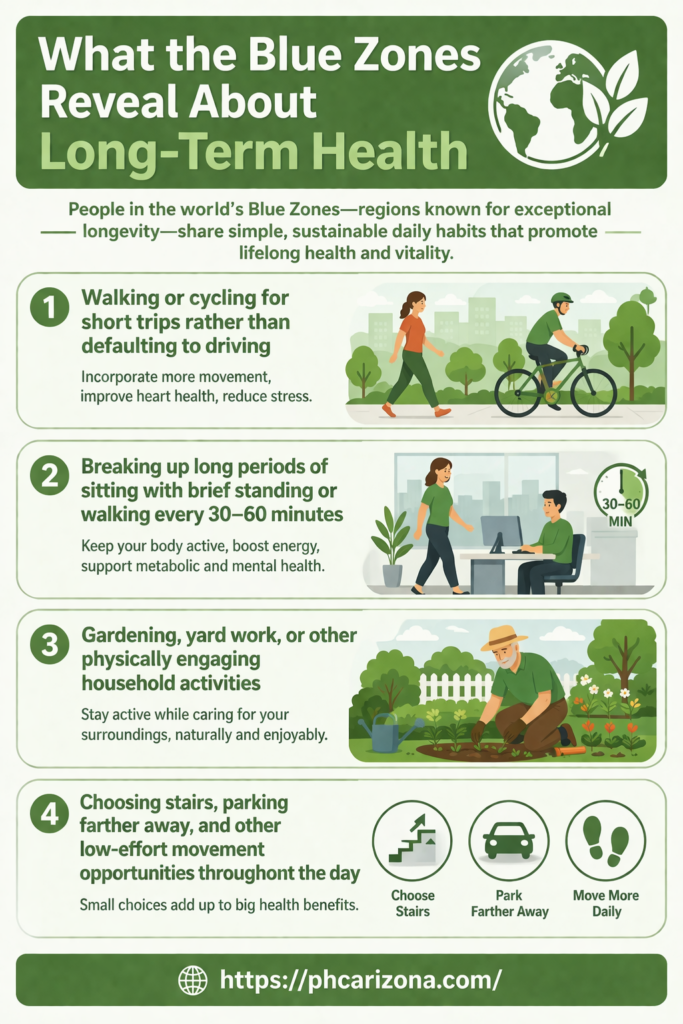
These habits aren’t complicated, but they do require intention. A Scottsdale physician at Physicians Health Center (PHC) works with patients to identify which of these areas has the most room for improvement and how to make changes that you can stick to, rather than offering a generic checklist and sending patients on their way.
The core patterns that consistently appear across all five Blue Zone populations fall into a few clear categories: how they move, what they eat, how they manage stress, and how connected they are to others. Each one has solid clinical backing.
Movement That’s Built Into Daily Life
Blue Zone populations don’t go to the gym. They move naturally and constantly throughout the day – walking to neighbors’ homes, tending gardens, preparing food by hand. This kind of low-intensity, sustained movement has a meaningfully different physiological profile than sitting all day and exercising for one hour.
Prolonged sitting raises cardiovascular risk, disrupts metabolic function, and increases all-cause mortality – even in people who exercise regularly. The antidote isn’t necessarily more workouts. It’s more movement woven into ordinary routines.
For patients in Arizona, the year-round warm climate actually makes this easier than in much of the country. Walking trails, outdoor recreation, and the ability to be physically active in January are genuine advantages that Blue Zone principles can take direct advantage of.
What this looks like
- Walking or cycling for short trips rather than defaulting to driving
- Breaking up long periods of sitting with brief standing or walking every 30–60 minutes
- Gardening, yard work, or other physically engaging household activities
- Choosing stairs, parking farther away, and other low-effort movement opportunities throughout the day
Eating Patterns, Not Diets
Blue Zone populations don’t follow structured diets. They follow consistent, culturally embedded eating patterns that happen to align well with what decades of nutritional research now support.
Plant foods form the foundation – vegetables, legumes, whole grains, and nuts make up the majority of calories in every Blue Zone region. Meat is eaten infrequently and in small portions. Heavily processed foods are largely absent. Portions are moderate, often guided by the Okinawan principle of hara hachi bu – eating until about 80% full rather than until satiated.
The practical takeaway isn’t to eat exactly like someone in Sardinia. It’s to shift the balance of your plate – more plants, less processed food, smaller portions, and fewer meals.
Managing Stress
Chronic stress is one of the most well-documented causes of premature aging and disease. It elevates cortisol, promotes systemic inflammation, disrupts sleep, and leads to cardiovascular disease, immune dysfunction, and metabolic disorders. Blue Zone populations don’t avoid stress – they have reliable, habitual ways of downshifting it.
Okinawans practice a daily period of quiet reflection. Sardinians take a midday rest. Adventists in Loma Linda observe the Sabbath. Ikarians nap regularly. The form varies, but the function is the same: deliberate, regular recovery from the stressors of daily life.
Physicians Health Center in Scottsdale, AZ, emphasizes stress management. Unmanaged chronic stress has measurable effects on blood pressure, blood sugar, sleep quality, and immune function – all of which show up in lab work and long-term health.
Social Connection and a Sense of Purpose
Two factors that don’t get enough attention in most wellness conversations: who you spend time with, and whether your daily life feels meaningful.
Blue Zone centenarians consistently report strong social networks, close family ties, and a clear sense of purpose – what the Okinawans call ikigai, or “reason for being.” Research published in PLOS Medicine found that social isolation carries health risks comparable to smoking 15 cigarettes a day. Purpose, similarly, has been linked to lower rates of cognitive decline, reduced cardiovascular risk, and longer survival.
Physicians Health Center encourages patients to think about these dimensions as seriously as diet and exercise, because the evidence now supports treating them that way.
Applying Blue Zone Thinking in Scottsdale
Living in the greater Phoenix area gives you real advantages for several Blue Zone habits. The outdoor lifestyle is accessible year-round. Farmers’ markets, walkable neighborhoods in parts of Scottsdale, and strong community organizations make plant-focused eating and social engagement more available than in many other parts of the country.
PHC Arizona helps patients incorporate these principles into patient care through preventive health screenings, nutrition guidance, and chronic disease management. Working with a physician in Scottsdale means getting care that looks at your complete health.
People Also Ask
How does geography affect my health in the Southwest?
The climate in regions like ours influences hydration needs and Vitamin D levels. Living in a sunny, dry environment requires specific adjustments to diet and skin protection to mirror the outdoor-centric health benefits seen in Mediterranean Blue Zones.
Can I start Blue Zone habits at any age?
Biological markers can improve within weeks of changing your habits. Whether you are in your 30s or 70s, shifting toward plant-based proteins and increasing social engagement can immediately lower inflammation and improve your heart health and cognitive function.
What is the “Wine at Five” habit?
Most Blue Zone residents drink one to two glasses of regional red wine daily with friends and food. This habit focuses on the antioxidants in the wine and the stress-reducing benefits of social interaction, rather than the alcohol itself.
Why are beans so important in these regions?
Legumes are a longevity “superfood” because they are packed with fiber and protein without the saturated fats found in meat. They stabilize blood sugar and promote a healthy gut, which is foundational for long-term immune health.
Can someone living in the U.S. realistically adopt Blue Zone habits?
Yes, though it requires some intentionality since American environments don’t naturally support these patterns. Small, consistent changes to movement, diet, and social habits add up significantly over time without requiring a complete lifestyle overhaul.
How does sleep factor into Blue Zone longevity?
Sleep isn’t a defined Blue Zone pillar, but most centenarians in these regions report adequate, consistent sleep – often aided by napping. Chronic sleep deprivation accelerates biological aging and raises the risk of nearly every major chronic disease.
