
Surprise Location

What Are the Best Ways to Lower My A1C While Living an Active Lifestyle in Surprise?
Managing blood sugar isn’t just about what you eat or what medications you take. It’s about how all the moving parts of your daily life fit together, and those parts often include an active outdoor lifestyle that can actually work strongly in your favor. The challenge is knowing how to use that activity strategically, pair it with the right nutritional habits, and stay on top of the lab numbers that tell you whether it’s working.
Your A1C is one of those numbers. It reflects your average blood glucose over the previous two to three months, giving you and your care team a far more complete picture than a single fasting glucose reading ever could. Getting it down and keeping it down requires a few things working together consistently. Here’s what the evidence actually supports.
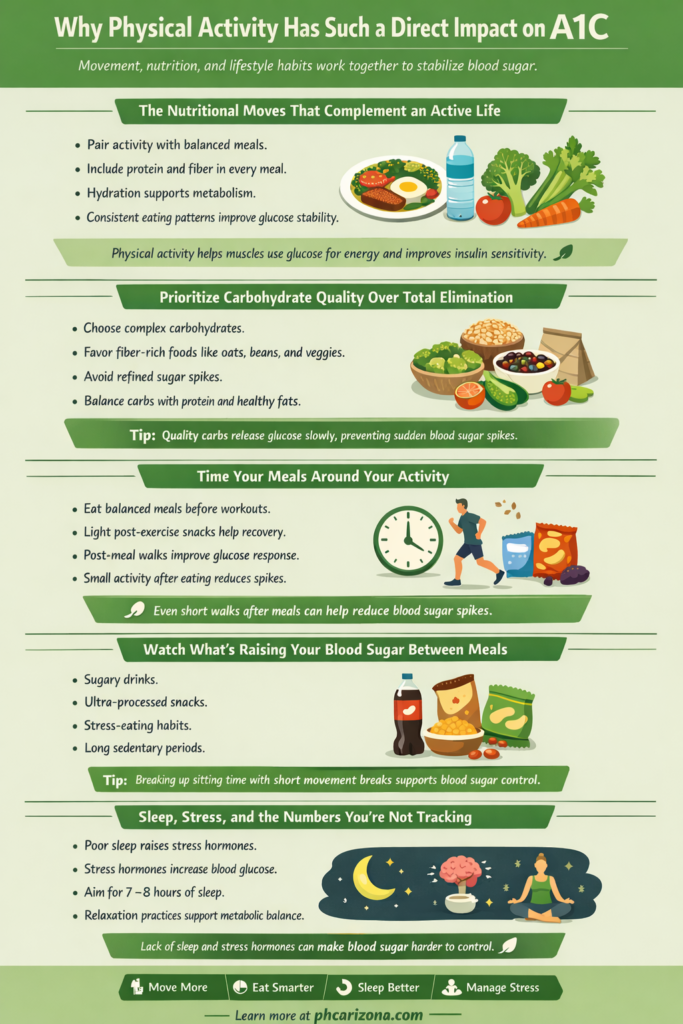
Why Physical Activity Has Such a Direct Impact on A1C
Exercise lowers blood sugar through a mechanism that doesn’t require insulin. When your muscles contract during physical activity, they pull glucose directly from the bloodstream for fuel. This effect continues for hours after you stop moving, which is part of why even moderate daily activity produces measurable changes in glycemic control over time.
The American Diabetes Association recommends at least 150 minutes of moderate-intensity aerobic activity per week, spread across most days, along with two or more sessions of resistance training. Building on it with guidance from a health care physician in Surprise at Physicians Health Center ensures your activity level is matched to your actual clinical picture.
Resistance training deserves attention for people working to lower A1C. Building lean muscle mass increases your body’s baseline glucose uptake, which means your blood sugar regulation improves even on rest days. Combining aerobic and resistance training consistently outperforms either approach alone in clinical studies.
The Nutritional Moves That Complement an Active Life
Exercise opens the door, but nutrition determines how far you walk through it. The dietary patterns most consistently linked to A1C reduction share a few common traits: they prioritize fiber, limit refined carbohydrates, moderate overall glycemic load, and include adequate protein to support muscle maintenance.
Prioritize Carbohydrate Quality Over Total Elimination
Cutting carbohydrates dramatically isn’t necessary or sustainable for most people. What matters more is the quality and timing of the carbohydrates you eat. Whole grains, legumes, vegetables, and fruit — all of which come with fiber that slows glucose absorption — have a very different effect on blood sugar than the same caloric amount of white rice, bread, or sweetened beverages. For active people, carbohydrates also serve as the primary fuel for moderate to high-intensity exercise, so eliminating them can undercut your workout performance and recovery.
Time Your Meals Around Your Activity
Post-exercise is one of the best times to consume carbohydrates, because muscle glucose uptake remains elevated for one to two hours after activity. A balanced meal or snack with both protein and complex carbohydrates within that window supports muscle recovery while taking advantage of your heightened insulin sensitivity. This doesn’t require precision tracking — it just means being intentional about not skipping food after exercise.
Watch What’s Raising Your Blood Sugar Between Meals
Beverages are one of the most overlooked contributors to elevated A1C. Sports drinks, fruit juices, flavored coffees, and sweetened teas all spike blood glucose without providing the fiber or satiety that whole foods do. In Surprise’s heat, staying hydrated is genuinely important, but water, unsweetened sparkling water, or herbal iced tea covers that need without the glycemic cost.
Sleep, Stress, and the Numbers You’re Not Tracking
Two variables consistently disrupt blood sugar management in otherwise health-conscious people: poor sleep and chronic stress. Both elevate cortisol, and elevated cortisol directly raises blood glucose by triggering hepatic glucose production — your liver releases sugar into the bloodstream even when you haven’t eaten.
Surprise residents dealing with the demands of Phoenix-area commutes, irregular schedules, or high-stress jobs may find that A1C improvement stalls even when diet and exercise are dialed in. Addressing sleep quality and finding sustainable stress reduction strategies — whether that’s structured rest, outdoor time, or support from your care team — rounds out the picture in ways that lab work alone won’t capture.
Monitoring Progress: What Your A1C Tells You
A1C is typically measured every three months for people actively managing diabetes, and every six months for those in a stable range. A result below 5.7% is considered normal. Between 5.7% and 6.4% indicates prediabetes. At 6.5% or above on two separate tests, the diagnosis is Type 2 diabetes. For most adults with diabetes, a target A1C below 7% significantly reduces the risk of complications — though your individual target may vary based on age, other health conditions, and medication.
Continuous glucose monitors (CGMs) have become increasingly accessible and provide real-time feedback that A1C testing can’t match. Seeing how specific meals, exercise sessions, and sleep patterns affect your glucose in real time accelerates the learning process considerably. If you’re working to lower your A1C and haven’t explored CGM options with your provider, it’s worth raising.
Putting It Together With the Right Clinical Support
The lifestyle strategies above are well-supported by research, but applying them to your individual health profile — your current A1C, your medications, your other health conditions, and your activity level — requires clinical input. What works well for one person at an A1C of 7.2% may need adjustment for someone at 9.1%. Generalized advice has limits.
Physicians Health Center Arizona serves the Surprise community and the surrounding West Valley areas, including Peoria, Glendale, and Goodyear. Working with a health care physician Surprise who knows your full history means your diabetes management plan reflects your actual life — not a template.
Lowering your A1C is absolutely achievable with consistent effort. The residents of Surprise who make the most progress tend to be those who combine intentional daily habits with regular check-ins and lab monitoring, so they can see what’s working, adjust what isn’t, and build on real momentum.
Your A1C Can Improve Just With a Conversation
Schedule an appointment with Physicians Health Center Arizona today. Whether you’re newly diagnosed, working to bring an elevated A1C down, or simply want to make sure your active lifestyle is actually translating to better metabolic health, a focused clinical conversation is the most efficient first step.
People Also Ask
How quickly can A1C improve with lifestyle changes?
Most people see measurable A1C improvement within three months of consistent dietary and exercise changes, since A1C reflects a 90-day blood glucose average. Significant reductions — one to two percentage points — are achievable in that timeframe, though individual results depend on starting A1C, medications, and adherence.
Does heat affect blood sugar management for active people in Arizona?
Yes. Extreme heat affects insulin absorption and increases the risk of dehydration, which can cause blood glucose to concentrate. People managing diabetes in Arizona should monitor more closely during summer outdoor activity, stay well hydrated with water rather than sugary drinks, and time strenuous activity for cooler morning or evening hours.
Can you lower A1C without medication?
People with prediabetes or early-stage Type 2 diabetes — lifestyle changes alone can normalize A1C. For others, medication is necessary alongside lifestyle changes. Your care team determines the right approach based on your current A1C level and overall health profile.
How does alcohol affect A1C?
Alcohol has a complex effect on blood sugar. It can cause initial hypoglycemia by blocking hepatic glucose production, but regular heavy drinking raises A1C over time. Moderate consumption — up to one drink daily for women, two for men — is generally considered low-risk, but discuss your specific situation with your physician.
What is the difference between fasting glucose and A1C?
Fasting glucose is a single-point measurement taken after an overnight fast. A1C reflects the percentage of hemoglobin with attached glucose, averaging blood sugar levels over two to three months. A1C is considered a more reliable indicator of long-term glycemic control and diabetes risk.
