
Surprise Location

Signs You Might Need to Visit an Internist for a Comprehensive Check-Up
Your health is one of your most valuable assets, yet we often ignore subtle signs. Ignoring signs such as fatigue, weight fluctuations, or pain can lead to serious problems in the future. You may think you can ignore the minor inconvenience, but this could be your body’s way of telling you that something is wrong and that you should consult an internist.
If you have an unexplained symptom or feel “off”, it is time to consider looking for an internist because they can diagnose and treat all aspects of adult health. Internal medicine specialists can also help manage both chronic and acute conditions. This blog will describe many common signs that may indicate the need for internal medicine services for a full medical evaluation.
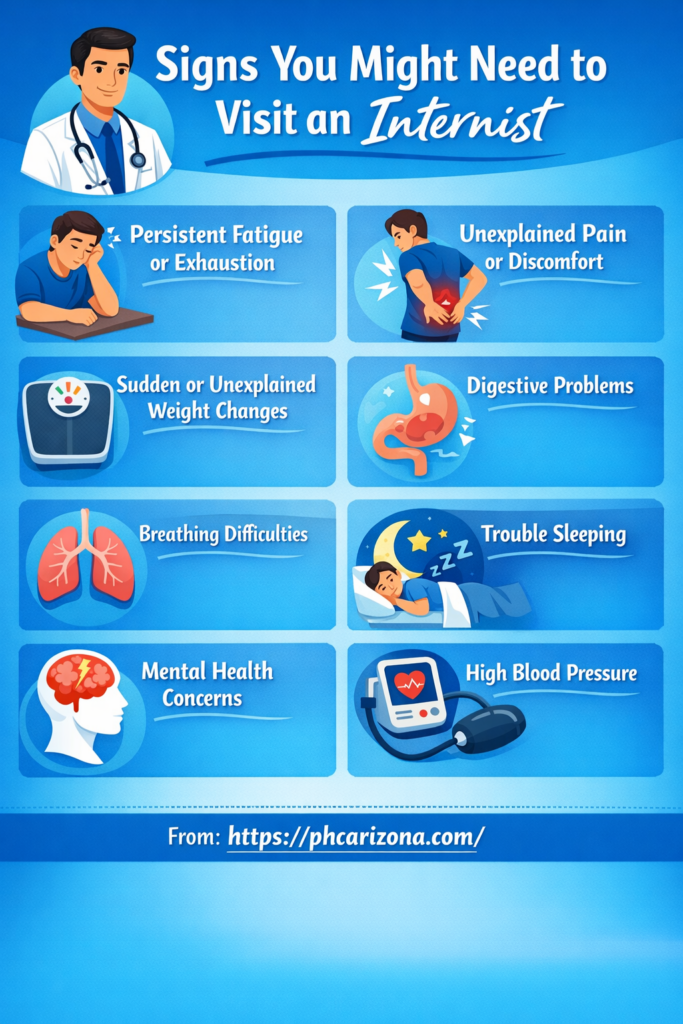
Persistent Fatigue or Exhaustion
It is normal to feel tired at the end of a long workday; however, if you experience fatigue even after sufficient rest, it may signal something more serious. This is also true when waking up in the morning and still feeling tired; this can be a sign of many diseases, such as anemia, hypothyroidism, or heart disease. If you experience fatigue during your daily activities, it is recommended that you consult an internist.
Unexplained Pain or Discomfort
If you have been experiencing ongoing pain or discomfort without any apparent cause, you would benefit from seeing an internist for relief. Ongoing pain can come from many different sources but may indicate a larger issue, such as inflammation or arthritis. Visiting an internist in Scottsdale will help you properly identify the cause of your pain and work towards solutions.
Sudden or Unexplained Weight Changes
Unexplained weight gain or loss may be a symptom of an underlying health condition. It can be associated with diseases such as thyroid disorders, diabetes, or cancer, as well as hormonal or metabolic disorders. If you experience any significant weight changes, consult an internist for evaluation.
Digestive Problems
Are you suffering from frequent bloating, nausea, or changes in your bowel movements (diarrhea or constipation)? If you don’t treat these early, it could be due to a disorder such as irritable bowel syndrome (IBS), celiac disease, or another gastrointestinal condition. An internist can help you determine what is causing your digestive issues and advise you on treatment options to relieve your symptoms.
Breathing Difficulties
If you are having trouble breathing, like shortness of breath when doing normal activities, or if you are unable to catch your breath when you’re lying down, you should contact an internist, as these could indicate a problem with your lungs, such as asthma, a heart condition, or a lung infection. An internist will do whatever tests are necessary to diagnose the underlying reason for any breathing difficulty you may have and recommend treatment options.
Trouble Sleeping
Sleep problems, such as experiencing difficulty falling asleep, staying asleep all night, or waking up feeling like you didn’t get any sleep, can have an impact on your health and well-being. Chronic sleep problems can be caused by many factors, including sleep apnea, stress, or heart disease. If you have difficulty sleeping to the point that it is affecting your health or well-being, an internist will help you identify the cause of your sleeplessness and suggest ways to improve your sleep quality.
Mental Health Concerns
Having feelings of anxiety or depression, as well as having difficulty concentrating, can greatly interfere with your daily routine and productivity. Mental health issues such as these may sometimes be a result of a physical issue, such as a hormone imbalance or a nutrient deficiency. An internist will evaluate your overall health and will be able to refer you to a specialist, if necessary, for treatment of any mental health issues you may have.
Skin Changes
Changes in the skin, such as the appearance of new moles or unexplained rashes or bruises, shouldn’t be overlooked. These may be signs of an underlying medical disorder, ranging from autoimmune conditions to infections or cancer. Our internist in Scottsdale can assess these changes and, as needed, refer you to a dermatologist to ensure timely care.
High Blood Pressure
Hypertension or high blood pressure is a condition that usually presents no symptoms but can cause serious health problems like stroke, heart disease, and kidney damage. Routine visits to an internist can catch high blood pressure early, when it can be treated and complications avoided.
Family History of Chronic Conditions
Source: Care Coordination Software by ThoroughCare
You have a family history of diabetes, heart disease, cancer, and other diseases that are known to run in families or are genetic conditions. You will have an increased risk of developing these diseases if they are common in your family; however, regular exercise and healthy habits can help reduce that risk. An internist can perform regular health check-ups to monitor your various body functions and detect the early signs of conditions. An internist can tell you preventive measures and screenings to consider based on your family history.
Conclusion: Take Control of Your Health
If you see any of the signs described in this blog, do not wait for them to become larger issues. Regular check-ups with an internist in Scottsdale can keep you a number of steps ahead of even serious health risks. The sooner a health issue is identified, the easier it will be to address, and an internist can provide continued care to help you maintain your overall health.
At Physicians Health Center, we offer comprehensive health care services, including direct primary care, for the people of Scottsdale and the surrounding areas. Our expert internists are here to help you take charge of your health and increase your longevity.
Take Action for Your Health Today
Don’t wait until symptoms worsen. Book your complete check-up today with Physicians Health Center and get started towards a healthier you!
Common Questions Most People Have
How often should I visit an internist for a check-up?
It’s recommended to have a check-up annually, but if you have underlying conditions or concerns, more frequent visits may be necessary.
What happens during a comprehensive check-up with an internist?
A comprehensive check-up typically includes a physical examination, lab tests, screenings, and an assessment of your health history and any symptoms you might be experiencing.
Can an internist diagnose and treat mental health conditions?
Yes, an internist can diagnose underlying medical causes of mental health symptoms and refer you to specialists when needed.
Should I see an internist for digestive issues?
Yes, if you’re experiencing persistent digestive problems, an internist can help diagnose the cause and recommend appropriate treatment.
