
Surprise Location

Understanding Vital Signs: Why We Measure BP, Pulse, and BMI
Ever wondered what your blood pressure (BP), pulse, and Body Mass Index (BMI) say about your health? These three simple yet powerful measurements give healthcare providers key insights into your overall well-being. Vital signs like BP, pulse, and BMI are fundamental indicators used during routine health checkups to monitor your body’s performance and catch potential issues early.
Whether you’re feeling great or experiencing discomfort, keeping track of these measurements is a proactive step toward maintaining a healthy lifestyle. At Physicians Health Center, we believe in using these vital signs to keep you informed and in control of your health.
What Are Vital Signs?
Vital signs are basic measurements of your body’s most critical functions. They serve as a snapshot of your body’s overall health and can reveal a lot about your heart, circulation, and even your risk for chronic conditions.
Common vital signs include temperature, blood pressure (BP), pulse, respiratory rate, and BMI. Among these, BP, pulse, and BMI are particularly important as they provide insight into your cardiovascular health, circulation, and weight status.
- Blood Pressure (BP) measures the force of blood against the walls of your arteries. High or low BP can signal heart or kidney problems.
- Pulse refers to the number of heartbeats per minute. It gives us a glimpse into your heart’s rhythm and efficiency.
- BMI is an indicator of body fat based on your height and weight. It helps assess your risk for conditions like diabetes, heart disease, and other chronic health issues.
Regular monitoring of these vital signs ensures early detection of any abnormal changes, enabling timely intervention. These measurements, along with other health assessments, help your physician in Surprise create a comprehensive picture of your health, guiding personalized care.
Why We Measure Blood Pressure (BP)
Blood pressure is one of the most commonly measured vital signs because it plays a direct role in heart health. BP refers to the pressure exerted by circulating blood on the walls of blood vessels. It is recorded with two numbers: systolic (the top number) and diastolic (the bottom number).
- Systolic pressure measures the force of blood against the artery walls when your heart beats.
- Diastolic pressure measures this force when your heart is at rest between beats.
A normal BP reading is typically around 120/80 mm Hg. However, readings that are consistently high (above 130/80 mm Hg) may indicate hypertension, while low readings (under 90/60 mm Hg) may suggest hypotension.
High blood pressure (hypertension) can cause significant damage to your heart, arteries, and organs over time. It is a leading risk factor for heart disease, stroke, and kidney failure. On the other hand, low blood pressure (hypotension) can lead to dizziness, fainting, and organ damage if severe.
Understanding your BP is crucial in preventing these life-threatening conditions. Regular monitoring allows you and your physician to manage and control BP levels effectively.
Understanding Your Pulse
Your pulse is an easy-to-measure indicator of your heart rate, and it offers valuable insights into your cardiovascular health. It refers to the number of times your heart beats per minute (bpm). A normal resting pulse for adults ranges from 60 to 100 bpm, depending on age, fitness, and overall health.
A higher pulse rate (tachycardia) may be a sign of stress, fever, anemia, or heart conditions, while a lower pulse rate (bradycardia) could indicate issues such as heart block or an overly efficient heart in athletes. Both cases warrant further evaluation by your physician, as they can affect your ability to perform daily activities and your long-term health.
Factors like activity levels, emotions, and stress can also cause temporary increases or decreases in pulse rate. For instance, physical activity increases pulse rate as your heart pumps more blood to supply oxygen to your muscles. Similarly, stress or anxiety can elevate pulse rate temporarily.
Regular monitoring of your pulse helps detect any abnormalities early and provides a clear indication of how well your heart is functioning.
What BMI Tells You About Your Health
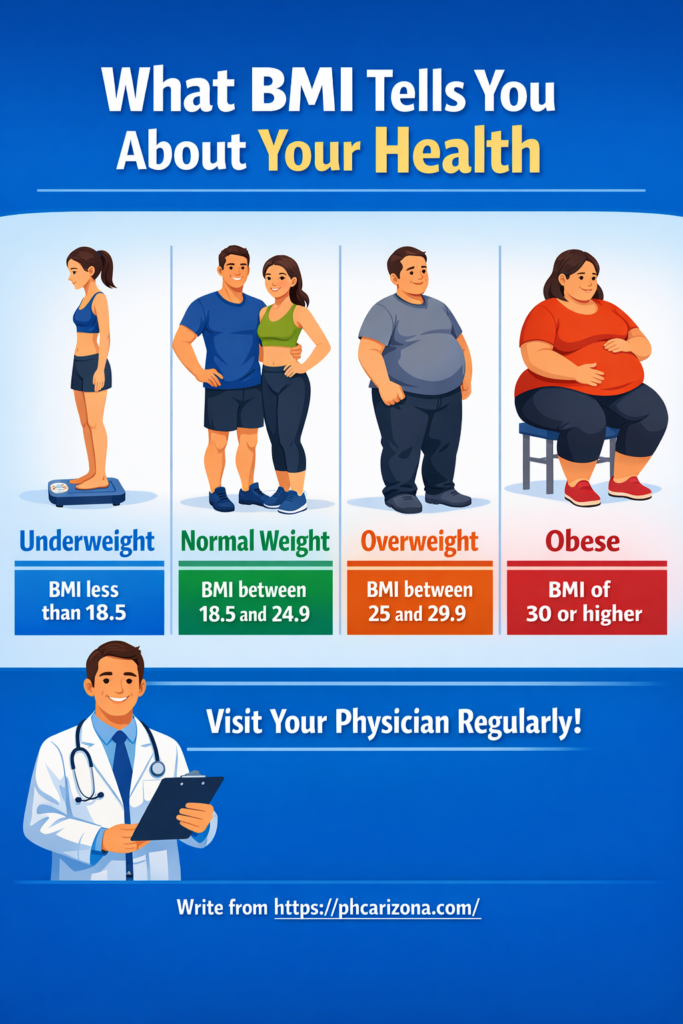
Body Mass Index (BMI) is a simple, commonly used method to assess whether you have a healthy weight. It is calculated using your weight and height and provides a general indication of whether you’re underweight, normal weight, overweight, or obese.
BMI is a helpful screening tool for understanding your risk for various health conditions like diabetes, heart disease, and sleep apnea.
To calculate BMI, you divide your weight in kilograms by your height in meters squared. The result falls into one of the following categories:
- Underweight: BMI less than 18.5
- Normal weight: BMI between 18.5 and 24.9
- Overweight: BMI between 25 and 29.9
- Obese: BMI of 30 or higher
While BMI is an excellent starting point, it doesn’t measure body fat directly, which is why it’s essential to combine it with other measurements like waist circumference and body composition for a complete health assessment. A high BMI often signals an increased risk of chronic conditions, while a low BMI may indicate nutritional deficiencies or other health concerns.
The Importance of Regular Monitoring
Tracking your vital signs, BP, pulse, and BMI regularly is an essential part of preventive healthcare. These measurements help your physician detect early signs of health issues, such as heart disease, stroke, or obesity-related conditions, which might otherwise go unnoticed. By monitoring these signs, you can intervene early, reduce your risk, and avoid more serious health complications down the line.
For example, routine BP checks can help identify hypertension early, which is critical because high BP often shows no symptoms. Regularly checking your pulse can also reveal irregularities in your heart rhythm, and tracking your BMI can alert you to any weight-related health risks.
At Physicians Health Center, we emphasize the importance of these routine checks and encourage patients to make them a part of their regular health assessments.
How to Maintain Healthy BP, Pulse, and BMI
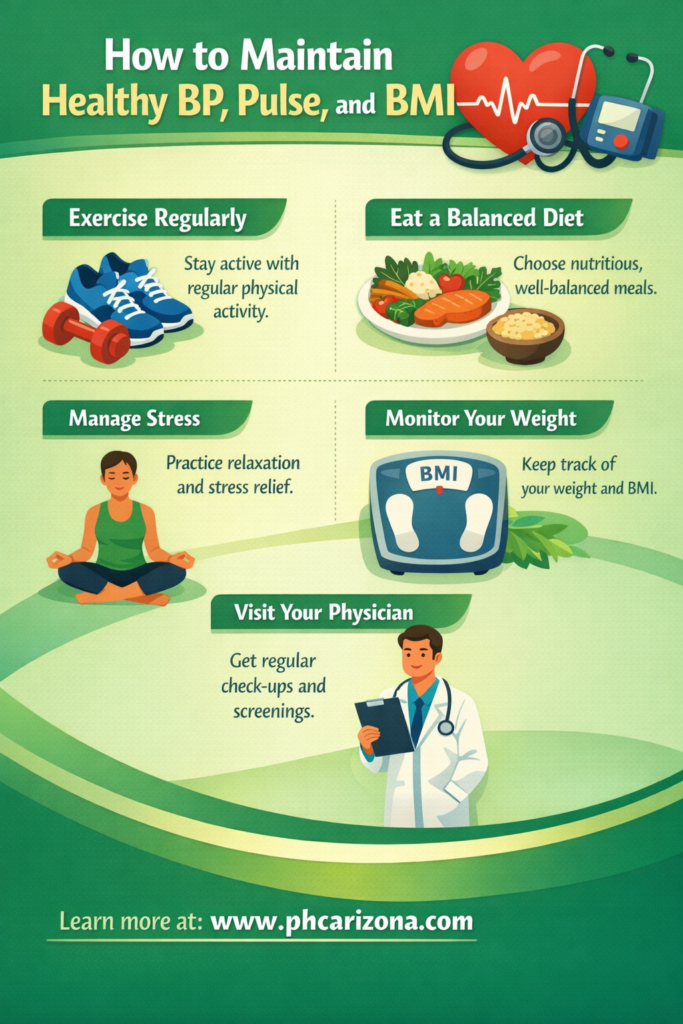
Maintaining healthy vital signs is essential for long-term health. Here are some practical tips for keeping your BP, pulse, and BMI in check:
- Exercise regularly: Physical activity is one of the best ways to maintain healthy BP, improve circulation, and manage weight. Aim for at least 30 minutes of moderate exercise most days of the week.
- Eat a balanced diet: A heart-healthy diet rich in fruits, vegetables, whole grains, and lean proteins can help control BP and maintain a healthy weight.
- Manage stress: Stress can elevate BP and pulse rates, so finding ways to relax, like meditation, yoga, or deep breathing exercises, is important for overall health.
- Monitor your weight: Keeping your BMI in the normal range reduces your risk of heart disease, diabetes, and other chronic health issues.
- Visit your physician regularly: Regular checkups with your physician in Surprise will ensure that any changes in your BP, pulse, or BMI are detected early and managed properly.
By following these guidelines, you can help ensure that your vital signs remain within healthy ranges.
In conclusion, monitoring your BP, pulse, and BMI is crucial for understanding and maintaining your health. These vital signs offer essential insights into your body’s function, and keeping track of them regularly helps catch health problems before they become serious.
If you haven’t had your BP, pulse, or BMI checked recently, make sure to schedule a visit with your physician at Physicians Health Center today. A simple check can make all the difference in maintaining a healthy, happy life.
What People Ask
How often should I check my pulse?
It’s a good idea to check your pulse regularly, especially if you experience symptoms like dizziness, palpitations, or irregular heartbeats. Your physician can guide you on the frequency.
How can I lower my blood pressure naturally?
Regular exercise, a balanced diet low in sodium, reducing alcohol intake, and stress management techniques like yoga can help lower blood pressure.
Can stress affect my pulse rate?
Yes, stress can temporarily increase your pulse rate. Managing stress through relaxation techniques can help keep your pulse within a healthy range.
Can a low BMI be harmful to my health?
Yes, a low BMI may indicate malnutrition or other health problems, including weakened immunity or fertility issues. It’s important to maintain a balanced weight for overall health.
How do I know if my BMI is in a healthy range?
A healthy BMI falls between 18.5 and 24.9. A BMI above or below this range may indicate an increased risk of health issues like heart disease or diabetes.
